
How to Tell if Your Shilajit is Real (The Dissolution Test & Beyond)
Up to 95% of shilajit products contain dangerous heavy metals or synthetic fillers. Here’s how to protect yourself — with tests you can do at home.
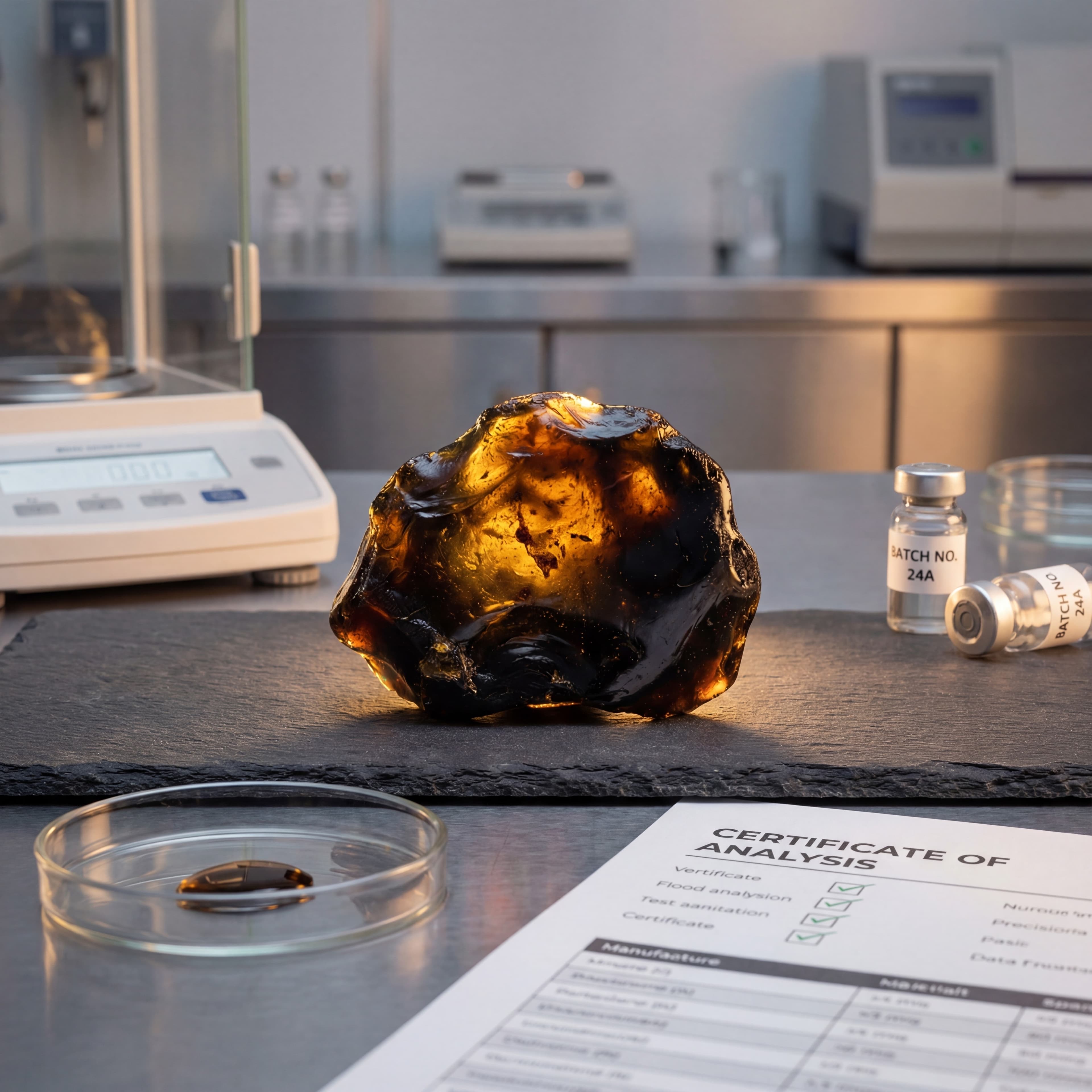
The Problem Nobody Wants to Talk About
The shilajit market is booming. TikTok alone has over 5 billion views on shilajit content. But with popularity comes counterfeits — and in the supplement world, counterfeits don’t just waste your money. They can harm you.
“There are so many fakes out there… how do I know it’s real?” — the most common question on r/Supplements shilajit threads
Here’s what fake shilajit actually looks like: cheap mineral pitch mixed with coal tar, synthetic fulvic acid powder pressed into resin-shaped blocks, or genuine shilajit that’s been contaminated with dangerous levels of heavy metals during poor processing.
The good news? You can test shilajit authenticity at home.
The Three Home Tests
Test 1: The Dissolution Test
Drop a pea-sized amount into a glass of warm water. Real shilajit dissolves completely within a few minutes, turning the water a deep golden-brown or reddish-brown. No chunks. No particles. No residue at the bottom. If it doesn’t dissolve fully, or if you see particles floating, it’s not pure.
Test 2: The Flame Test
Hold a lighter to a small amount of shilajit. Real shilajit bubbles and expands but does not catch fire. It won’t produce a flame. Fake shilajit — especially coal tar-based fakes — will burn and produce a distinct plastic or chemical smell. If it catches fire, throw it away.
Test 3: The Temperature Test
Put your shilajit in the refrigerator for 30 minutes. Real shilajit hardens and becomes brittle. Take it out and leave it at room temperature — it should soften and become pliable again. This responsiveness to temperature is a fundamental property of authentic shilajit resin. Fakes don’t change.
Beyond Home Tests: What Lab Reports Tell You
Home tests confirm basic authenticity. But they can’t tell you about heavy metal contamination, actual mineral content, or microbial safety. For that, you need lab reports.
When evaluating a brand’s lab testing, look for:
- ISO/IEC 17025 accreditation — the international standard for testing labs. If the lab isn’t accredited, the results are meaningless.
- Heavy metal panels — specifically lead (Pb), mercury (Hg), arsenic (As), and cadmium (Cd). All four, not just one or two.
- Batch-specific results — not a generic certificate. The report should reference a specific batch or lot number.
- Published, not just claimed — if a brand says “lab tested” but won’t show you the report, that tells you everything.
Red Flags to Watch For
We Publish Every Lab Report
Because if you can’t see the results, why would you trust the product?
View Our Lab Testing